
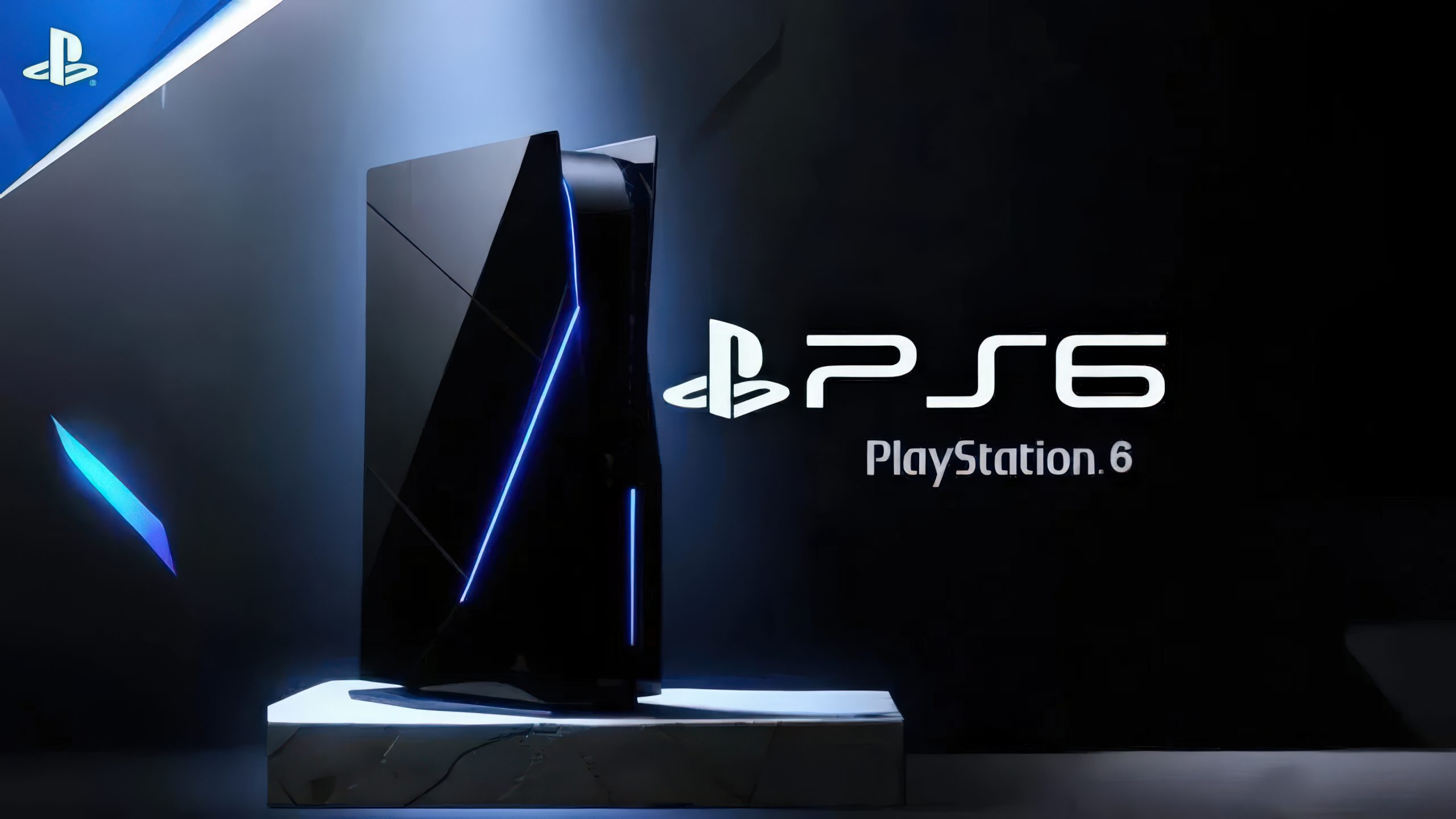
Why Gamers Are Already Talking About PS6
The buzz around the PlayStation 6 (PS6) isn’t just hype—it’s a natural progression of excitement that follows every major leap in gaming technology. Even though the PS5 still feels relatively fresh to many players, the gaming community has already started speculating about what Sony’s next console could bring to the table. Why? Because technology never stands still, and gamers are always chasing that next immersive, jaw-dropping experience.
Think about how quickly gaming expectations evolve. What once felt revolutionary—like 4K graphics or ultra-fast load times—soon becomes the baseline. Players now crave deeper realism, smarter AI, and seamless worlds that feel alive. That’s exactly why conversations about the PS6 are heating up across forums, social media, and tech communities. People aren’t just asking “when” it will arrive—they’re asking “how far can it go?”
There’s also a cultural element at play. PlayStation consoles have always been more than just hardware—they represent eras. From the nostalgia of the PS2 to the online revolution of the PS3 and the dominance of the PS4, each generation has shaped how we play and connect. The PS6 is expected to carry that legacy forward, possibly redefining gaming once again.
Industry insiders and analysts have hinted that Sony is already in early development stages, which only fuels speculation. Combine that with rapid advancements in artificial intelligence, cloud gaming, and graphics processing, and you’ve got a perfect storm of anticipation. Gamers aren’t just curious—they’re invested in what the future holds.
The Evolution from PS5 to PS6
To understand what the PS6 might become, it helps to look at how far we’ve come. The leap from PS4 to PS5 wasn’t just about better graphics—it introduced lightning-fast SSDs, near-instant loading, and immersive features like the DualSense controller’s haptic feedback. These innovations changed how games feel, not just how they look.
Now imagine taking that leap and doubling it.
The transition from PS5 to PS6 is expected to focus on eliminating limitations entirely. While the PS5 still relies on some traditional hardware constraints, the PS6 could push boundaries with near-zero latency, hyper-realistic environments, and intelligent systems that adapt to players in real time. It’s less about incremental upgrades and more about redefining the experience.
One major area of evolution is likely to be processing power. The PS5 already uses a custom AMD architecture, but by the time the PS6 launches, we could see chips that rival high-end gaming PCs—or even surpass them. This would allow for massive open worlds without loading screens, complex physics simulations, and AI-driven characters that behave unpredictably, just like real people.
Another key shift could be in game distribution and access. Physical discs may become less relevant as cloud gaming and digital downloads dominate. The PS6 might act more like a hub than a traditional console, seamlessly connecting players to games, services, and communities.
In many ways, the PS6 isn’t just the next PlayStation—it’s the next step in the evolution of entertainment itself. And if history tells us anything, Sony is likely to aim high, pushing the industry forward in ways we can only begin to imagine.
Expected Release Date of PS6
Sony’s Historical Release Pattern
Predicting the release date of the PlayStation 6 isn’t an exact science, but Sony’s history gives us some pretty strong clues. If you look at previous console launches, there’s a pattern that’s hard to ignore. The PlayStation 3 launched in 2006, followed by the PS4 in 2013, and then the PS5 in 2020. That’s roughly a 6–7 year cycle between each generation.
Following that timeline, it’s reasonable to expect the PS6 to arrive sometime around 2026 or 2027. This aligns with industry speculation and hints from Sony executives who have suggested that the PS5 lifecycle will follow a similar trajectory to its predecessors. It’s almost like clockwork—just when developers start squeezing every ounce of performance out of a console, Sony steps in with something new.
But timing isn’t just about tradition. It’s also about technology readiness. Sony won’t release the PS6 until it can deliver a significant leap in performance and features. Launching too early risks underwhelming consumers, while waiting too long could allow competitors to gain an edge. It’s a delicate balance, and Sony has historically played it well.
Another factor is market conditions. The PS5 faced supply chain challenges during its early years, which affected availability worldwide. Sony will likely want to avoid repeating that scenario with the PS6, ensuring a smoother launch with ample stock.
So while nothing is officially confirmed, all signs point to a mid-to-late decade release. And if you’re a gamer, that timeline probably feels both exciting and painfully far away at the same time.
Industry Predictions and Rumors
When it comes to the PS6 release date, rumors are everywhere—and some are surprisingly credible. Industry analysts, tech insiders, and even leaked documents have hinted at timelines that align with Sony’s traditional release cycle. Some reports suggest that Sony is already working on early prototypes, which is standard practice years before a console hits the market.
One interesting angle comes from chip manufacturers like AMD, who partner with Sony to develop custom processors. There have been whispers about next-generation chip architectures being designed with future consoles in mind. If these rumors are true, it means the PS6 is not just a concept—it’s actively being planned behind the scenes.
Another layer of speculation involves competition. Microsoft is also expected to release a next-gen Xbox around the same time. This creates a sort of silent race, where both companies aim to outdo each other in performance, features, and ecosystem. The result? Gamers win, as innovation accelerates.
There are also discussions about whether the PS6 could launch alongside or integrate heavily with cloud gaming platforms. Some insiders believe Sony might position the PS6 as part of a broader ecosystem rather than a standalone device. This could influence the release strategy, possibly introducing phased rollouts or hybrid models.
Of course, not all rumors are reliable. The gaming industry thrives on speculation, and it’s easy for misinformation to spread. Still, when multiple sources point in the same direction, it’s worth paying attention.
At the end of the day, while we don’t have an official date, the consensus is clear: the PS6 is coming, and it’s closer than it might seem.
PS6 Hardware and Specifications
Next-Gen Processor and GPU Expectations
When people imagine the PlayStation 6, the first thing that usually comes to mind is raw power—and for good reason. Hardware is the backbone of any console, and Sony has consistently pushed the limits with each generation. With the PS6, expectations are sky-high, and honestly, they should be.
The PS5 already introduced a custom AMD Zen 2 CPU and RDNA 2 GPU, delivering performance that rivaled mid-to-high-end gaming PCs at launch. But by the time the PS6 arrives, we’re likely looking at Zen 5 or even newer architectures, paired with next-gen RDNA graphics that could redefine what “realistic” even means in gaming. Imagine lighting so accurate it mimics real-world physics, or textures so detailed you can see individual pores on a character’s skin without any performance drop.
One of the biggest anticipated upgrades is ray tracing on steroids. While the PS5 supports ray tracing, it often comes with trade-offs like reduced frame rates. The PS6 could eliminate those compromises entirely, offering full ray tracing at 4K or even 8K resolution with stable 60–120 FPS. That’s not just an upgrade—it’s a transformation.
There’s also growing speculation about AI-assisted rendering, similar to NVIDIA’s DLSS technology. This would allow games to look sharper while using fewer resources, making performance more efficient without sacrificing quality. It’s like having a smart assistant inside your console, constantly optimizing visuals in real time.
And let’s not forget about frame rates. Gamers are increasingly demanding smoother gameplay, and the PS6 could make 120 FPS the new standard rather than a luxury. Combine that with ultra-low latency, and you’re looking at an experience that feels almost instantaneous.
In short, the PS6 won’t just be faster—it’ll be smarter, more efficient, and capable of delivering experiences that blur the line between reality and virtual worlds.
Storage Technology Advancements
If there’s one thing the PS5 nailed, it’s storage speed. The custom SSD revolutionized load times, making them nearly disappear in many games. But the PS6? It’s expected to take that concept and push it even further into the realm of “wait, did it even load?”
Future storage solutions could involve next-generation NVMe SSDs with speeds that are several times faster than what we currently have. We’re talking about data transfer rates so high that entire game environments can be streamed instantly, without any visible transitions. Imagine fast traveling in an open-world game and arriving instantly—no black screen, no loading bar, just seamless movement.
Capacity is another big factor. Modern games are massive, often exceeding 100GB. By the time the PS6 launches, that number could easily double. To keep up, Sony may include 2TB or even 4TB of internal storage as standard, reducing the need for constant game management.
There’s also a strong possibility of modular or expandable storage solutions becoming more user-friendly. The PS5 already allows SSD expansion, but the process isn’t exactly beginner-friendly. The PS6 could simplify this, making upgrades as easy as plugging in a device.
Another exciting possibility is the integration of cloud-assisted storage. Instead of relying solely on local hardware, the PS6 might seamlessly pull data from the cloud when needed, effectively extending its storage capabilities beyond physical limits. This could revolutionize how games are installed and played, potentially reducing the need for large downloads altogether.
Storage might not sound glamorous, but it’s one of the most important aspects of gaming performance. And with the PS6, it’s set to become faster, bigger, and smarter than ever before.
RAM and Performance Boosts
Let’s talk about memory—because this is where things get really interesting. The PS5 comes with 16GB of GDDR6 RAM, which already allows for impressive multitasking and detailed environments. But the PS6 is expected to significantly raise the bar.
Industry speculation suggests we could see 32GB or even 64GB of RAM, enabling developers to create richer, more complex worlds. What does that mean for you as a player? Think fewer pop-ins, more detailed textures, and environments that feel alive in every direction. No more noticing objects suddenly appearing in the distance—everything will just be there, seamlessly integrated.
Higher RAM also opens the door for advanced AI systems within games. NPCs could have more complex behaviors, remember player actions, and react in ways that feel genuinely human. It’s like moving from scripted interactions to dynamic storytelling.
Performance isn’t just about specs—it’s about consistency. The PS6 is expected to deliver stable frame rates across all types of games, even the most demanding ones. This means no more choosing between “performance mode” and “quality mode.” You’ll get both, all the time.
Another potential improvement is instant multitasking. Imagine switching between multiple games or apps without any delay, picking up exactly where you left off. The PS5 introduced this concept with its activity cards, but the PS6 could refine it into something truly seamless.
In essence, the PS6’s RAM and performance upgrades will focus on removing limitations. Everything will feel smoother, faster, and more responsive, creating an experience that’s not just technically impressive but genuinely enjoyable.
Revolutionary Features of PS6
AI Integration in Gaming
Artificial intelligence is already shaping the future of gaming, but the PS6 could take it to an entirely new level. We’re not just talking about smarter enemies or better pathfinding—we’re talking about AI that fundamentally changes how games are played and experienced.
Imagine a game that adapts to your playstyle in real time. If you prefer stealth, the AI might create more opportunities for sneaking around. If you’re aggressive, enemies could become more strategic, forcing you to rethink your approach. It’s like having a game that learns who you are and evolves alongside you.
There’s also the potential for AI-generated content. Levels, missions, and even entire storylines could be dynamically created based on your choices. This would make every playthrough unique, adding endless replay value. No two players would have the exact same experience.
Voice interaction could become more advanced as well. Instead of selecting dialogue options, you might actually talk to characters, and they’d respond naturally using AI-driven language processing. It’s a bit like stepping into a living, breathing world where conversations feel real rather than scripted.
Behind the scenes, AI could also improve performance by optimizing resources, reducing load times, and enhancing graphics in real time. It’s like having an invisible assistant constantly fine-tuning your experience.
The integration of AI isn’t just a feature—it’s a paradigm shift. It has the potential to make games more immersive, personalized, and unpredictable than ever before.
Virtual Reality and Augmented Reality Enhancements
Virtual reality has already made its mark with devices like PlayStation VR2, but the PS6 could be the moment when VR truly goes mainstream. Sony is expected to double down on immersive technologies, potentially blending VR and AR (augmented reality) into a unified experience.
Picture this: you put on a headset, and instead of being completely cut off from the real world, digital elements are layered onto your surroundings. Your living room becomes a battlefield, a racetrack, or a fantasy kingdom. That’s the promise of AR integration, and the PS6 could make it a reality.
In terms of VR, improvements are likely to focus on resolution, comfort, and responsiveness. Higher-resolution displays will eliminate the “screen door effect,” making visuals crystal clear. Lighter, more ergonomic headsets will make longer gaming sessions comfortable. And faster tracking will ensure that every movement feels natural and precise.
There’s also potential for wireless VR, removing the need for cables entirely. This would make the experience more accessible and less cumbersome, encouraging more players to give it a try.
Developers could take advantage of these advancements to create entirely new types of games—experiences that aren’t possible on traditional screens. From immersive storytelling to physical gameplay, the possibilities are endless.
The PS6 might not just support VR and AR—it could redefine them, turning immersive gaming from a niche into the norm.
PS6 Design and Build Expectations
Sleeker and More Compact Form Factor
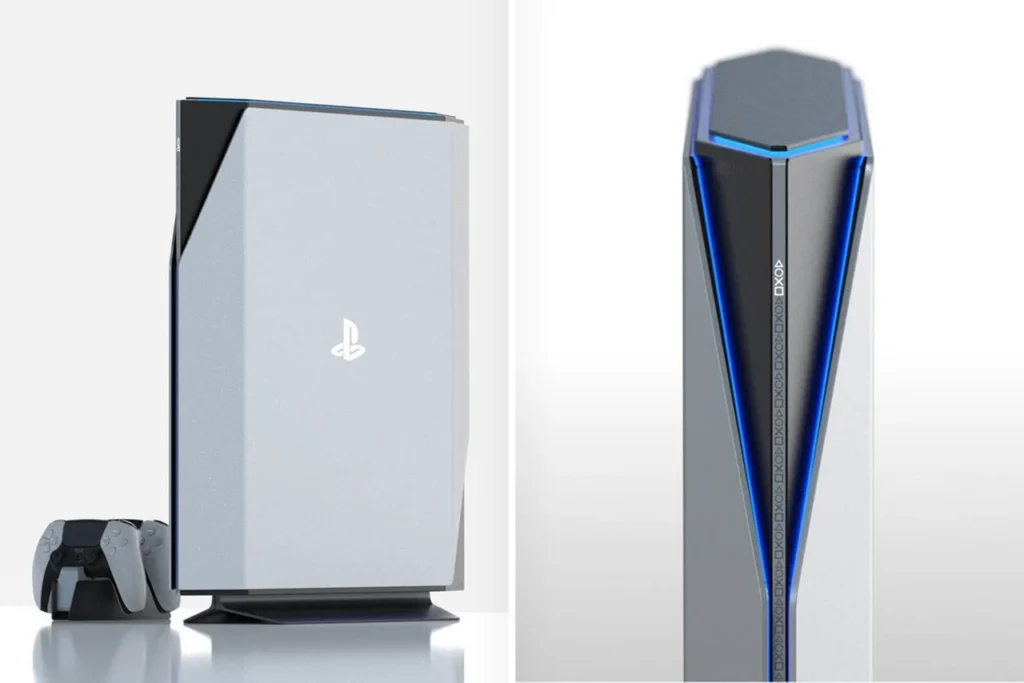
If there’s one thing gamers love to debate, it’s console design. The PS5’s bold, futuristic look sparked plenty of conversation—some loved it, others thought it was a bit too large and flashy. With the PS6, Sony is likely to take those reactions seriously and refine its approach, aiming for something that balances aesthetics with practicality.
The trend in consumer electronics is clear: smaller, more efficient, and more elegant. Advances in chip design and thermal efficiency mean that powerful hardware no longer requires bulky enclosures. The PS6 could embrace this by offering a more compact and streamlined design, making it easier to fit into modern entertainment setups without dominating the space.
Think about how smartphones evolved—once chunky and oversized, now sleek and minimal. Consoles are heading in the same direction. The PS6 might feature a clean, understated look, possibly with customizable panels or subtle lighting accents that let users personalize their setup without going overboard.
Another factor is portability within the home. While not a handheld device, a lighter and more compact PS6 would be easier to move between rooms or setups. This might sound minor, but for many players, flexibility matters more than ever.
Sony could also experiment with modular design elements, allowing users to upgrade or customize certain components without replacing the entire console. While this is still speculative, it aligns with broader tech trends toward sustainability and user flexibility.
At its core, the PS6 design will likely focus on blending into your lifestyle rather than standing out as a bulky piece of hardware. It’s not just about looking good—it’s about feeling like a natural part of your gaming environment.
Cooling System Innovations
Powerful hardware generates heat—it’s just physics. But how that heat is managed can make or break a console’s performance and longevity. The PS5 made significant improvements in cooling, but the PS6 is expected to take things even further, potentially introducing innovations that sound almost futuristic.
One possibility is the use of advanced vapor chamber cooling systems, which are already being used in high-end PCs and smartphones. These systems distribute heat more efficiently, allowing the console to maintain peak performance without overheating. Combined with improved airflow design, this could result in a system that stays cool even during intense gaming sessions.
Noise reduction is another key area. Nobody wants a console that sounds like a jet engine. The PS6 could feature near-silent cooling solutions, using larger, slower-spinning fans or even entirely new cooling technologies. Imagine playing a graphically intense game in complete silence—it’s a small detail that makes a big difference.
There’s also speculation about liquid cooling becoming more mainstream in consoles. While traditionally reserved for PCs, advancements in sealed liquid cooling systems could make this a viable option for the PS6. This would significantly improve thermal efficiency while keeping the system compact.
Temperature management isn’t just about comfort—it directly impacts performance. A well-cooled console can maintain higher clock speeds without throttling, ensuring consistent gameplay. It also extends the lifespan of the hardware, which is a win for both Sony and consumers.
In essence, the PS6’s cooling system won’t just be an upgrade—it’ll be a critical component that enables all the other advancements to function at their best.
PS6 Games and Exclusives
Expected Launch Titles
Every console lives and dies by its games, and the PS6 will be no exception. While hardware gets people excited, it’s the games that truly define a generation. Sony has a strong track record of delivering unforgettable exclusives, and expectations for the PS6 are incredibly high.
At launch, we can expect a mix of new IPs and established franchises. Titles like Spider-Man, Horizon, God of War, and The Last of Us are almost guaranteed to play a role in showcasing the console’s capabilities. These games aren’t just popular—they’re technological showcases that push hardware to its limits.
But the real excitement lies in what’s new. The PS6 could introduce entirely original experiences designed specifically for its advanced hardware. Imagine open worlds that evolve in real time, or narratives that change dynamically based on your actions. These aren’t just incremental improvements—they’re entirely new ways of experiencing games.
Developers will also have more freedom than ever before. With increased processing power and memory, they can create larger, more detailed worlds without worrying about technical limitations. This could lead to games that feel more alive, with ecosystems, weather systems, and NPC behaviors that interact in complex ways.
Another interesting possibility is the rise of cross-media experiences. Games could integrate with movies, TV shows, or other platforms, creating a unified entertainment ecosystem. Sony, with its presence in both gaming and film, is uniquely positioned to explore this.
Launch titles are more than just games—they’re statements. They show players what the console is capable of and set the tone for the generation. And if history is any indication, the PS6 lineup will be nothing short of impressive.
Backward Compatibility Improvements
One of the most appreciated features of recent consoles is backward compatibility, and the PS6 is expected to take this concept even further. The idea is simple: your existing game library shouldn’t become obsolete just because you upgraded your hardware.
The PS5 already supports many PS4 titles, but the PS6 could expand this to include full compatibility across multiple generations, possibly even reaching back to PS1, PS2, and PS3 games. This would create a unified PlayStation ecosystem where your entire gaming history is accessible in one place.
But it’s not just about playing old games—it’s about enhancing them. The PS6 could use its advanced hardware to improve older titles automatically, offering higher resolutions, better frame rates, and faster load times without requiring developer updates. It’s like giving your favorite classics a modern makeover.
There’s also potential for cloud-based backward compatibility, where older games are streamed rather than run locally. This would eliminate hardware limitations and make it easier to access a vast library of titles instantly.
For gamers, this means more value and less fragmentation. You won’t have to choose between nostalgia and innovation—you can have both. And for Sony, it strengthens brand loyalty by ensuring that players remain invested in the PlayStation ecosystem.
Backward compatibility isn’t just a feature—it’s a bridge between generations, connecting the past, present, and future of gaming.
Online Services and Ecosystem
Evolution of PlayStation Plus
Online services have become a cornerstone of modern gaming, and PlayStation Plus is at the center of Sony’s ecosystem. With the PS6, this service is expected to evolve significantly, offering more value and deeper integration than ever before.
Currently, PlayStation Plus provides access to online multiplayer, free monthly games, and a catalog of titles through its subscription tiers. But the PS6 could transform it into something closer to a full-scale gaming platform, similar to Netflix or Spotify.
Imagine having access to a विशाल library of games, including new releases, all available instantly through a subscription. This would lower the barrier to entry for players and encourage experimentation with different genres. It’s like having an entire gaming library at your fingertips.
Another potential upgrade is personalized recommendations powered by AI. Instead of browsing endlessly, the system could suggest games based on your preferences, playstyle, and history. It’s like having a curator who knows exactly what you’ll enjoy.
Social features are also likely to improve. The PS6 could offer more seamless ways to connect with friends, join games, and share experiences. From integrated voice chat to community hubs, the focus will be on making gaming more social and interactive.
The evolution of PlayStation Plus isn’t just about adding features—it’s about creating a cohesive ecosystem that enhances every aspect of the gaming experience.
Cloud Gaming Expansion
Cloud gaming is no longer a distant concept—it’s already here, and the PS6 could fully embrace it. Sony has been investing in cloud technology for years, and the next generation could see it become a central part of the gaming experience.
With cloud gaming, you don’t need powerful hardware to play demanding games. Instead, the heavy lifting is done on remote servers, and the game is streamed to your device. The PS6 could act as both a local powerhouse and a cloud gateway, giving players the best of both worlds.
This opens up a range of possibilities. You could start playing a game on your console, continue on your phone, and finish on a tablet—all without losing progress. It’s gaming without boundaries.
Latency has always been a challenge for cloud gaming, but advancements in internet infrastructure and server technology are rapidly improving performance. By the time the PS6 launches, we could see near-instant responsiveness, making cloud gaming indistinguishable from local play.
Cloud integration could also reduce the need for large downloads and updates. Games could be accessed instantly, saving time and storage space. It’s a shift from ownership to accessibility, and it’s likely to shape the future of gaming.
PS6 Price Predictions and Market Position
Predicting the price of the PlayStation 6 is a bit like trying to guess the cost of a car that hasn’t been built yet—but we can make some educated assumptions. The PS5 launched at $499 for the standard edition, and despite its powerful hardware, it was considered reasonably priced for what it offered.
The PS6, with its expected advancements, could push that price higher—potentially landing in the $599 to $699 range. While that might seem steep, it reflects the increasing cost of cutting-edge technology. Components like advanced GPUs, high-speed storage, and AI capabilities don’t come cheap.
However, Sony understands the importance of accessibility. There’s a strong possibility of multiple versions of the PS6, similar to the PS5 Digital Edition. This would allow players to choose a model that fits their budget, whether they prefer physical media or a fully digital experience.
Market positioning will also play a key role. Sony will need to balance innovation with affordability, ensuring that the PS6 remains competitive with other consoles and gaming platforms. This could involve strategic pricing, bundled offers, or subscription incentives.
Ultimately, the value of the PS6 won’t just be measured by its price tag—it’ll be defined by the experiences it delivers. And if it lives up to expectations, many gamers will see it as a worthwhile investment.
FAQs About PS6
1. When will the PS6 be released?
The PS6 is expected to launch around 2026 or 2027, based on Sony’s historical release cycle and industry predictions.
2. Will the PS6 support backward compatibility?
Yes, it’s highly likely that the PS6 will support backward compatibility, potentially across multiple PlayStation generations.
3. How powerful will the PS6 be?
The PS6 is expected to feature next-gen CPUs and GPUs, offering significantly improved performance, graphics, and AI capabilities.
4. Will PS6 support VR and AR?
Absolutely. The PS6 is expected to enhance both virtual reality and augmented reality, making immersive gaming more accessible and advanced.
5. What will the PS6 cost?
While not confirmed, the PS6 could be priced between $599 and $699, depending on features and models.