
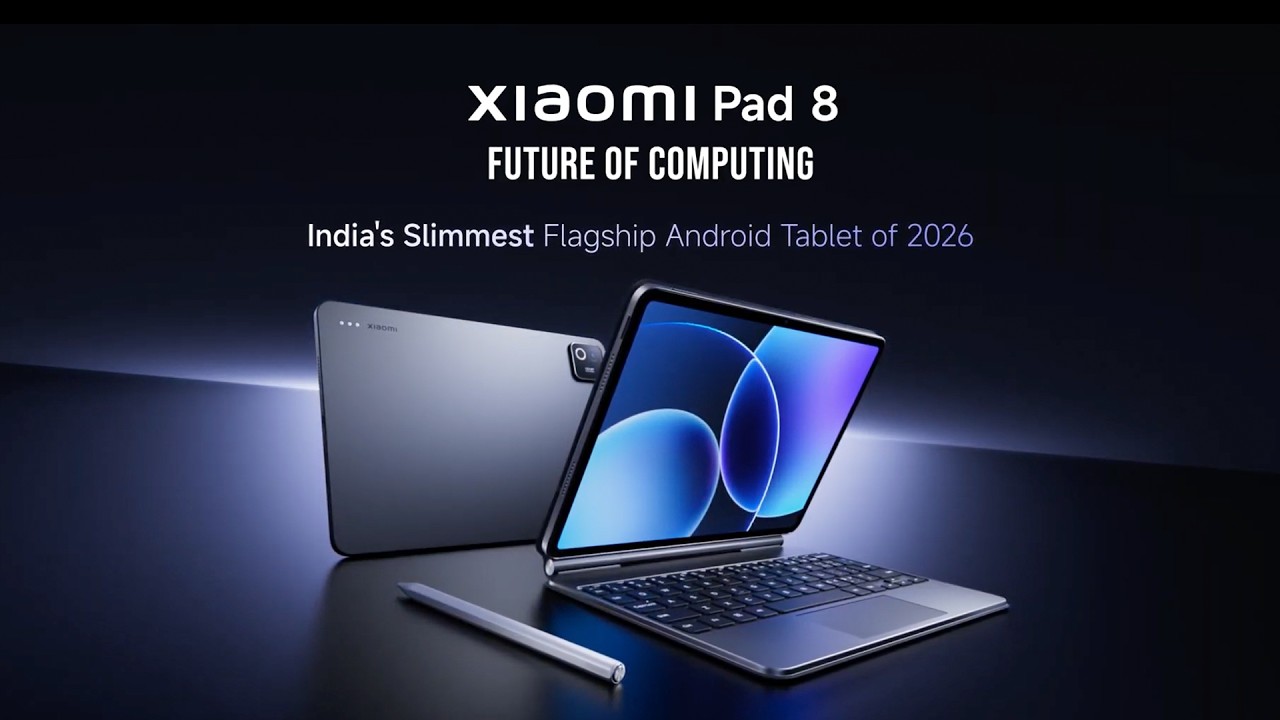
The Xiaomi Pad series has quickly evolved from being just another Android tablet line into a serious competitor in the premium tablet market. Over the past few years, Xiaomi has consistently refined its tablets with stronger processors, better displays, improved stylus support, and productivity-focused software. With the arrival of the Xiaomi Pad 8, the company aims to push that momentum even further. This tablet is designed not just for casual media consumption but also for gaming, productivity, and even light laptop replacement scenarios.
Think about how tablets are used today. They’re no longer just oversized smartphones. Many people rely on them for note-taking, drawing, video editing, remote work, and online learning. Xiaomi seems to understand this shift perfectly, and the Pad 8 reflects that strategy. The device brings a combination of high-refresh-rate display technology, powerful chipset performance, long battery life, and a polished software ecosystem that tries to bridge the gap between tablets and laptops.
One of the biggest reasons the Xiaomi Pad lineup has become popular is its balance between price and performance. Competitors like Apple’s iPad often dominate the premium space, but Xiaomi positions its tablets as powerful alternatives that deliver flagship-level features without pushing prices to extreme levels. If the Pad 8 follows the same philosophy, it could easily become one of the best Android tablets in its category.
Another key factor is Xiaomi’s growing ecosystem. From smartphones and earbuds to laptops and smart home devices, the company continues to integrate its products more closely. Tablets like the Pad 8 benefit greatly from this ecosystem because they can work seamlessly with Xiaomi phones, keyboards, styluses, and wireless accessories.
Throughout this detailed guide, we’ll break down every major aspect of the Xiaomi Pad 8, including its design, display quality, performance benchmarks, camera system, battery life, and connectivity options. If you’re considering buying a new tablet for work, gaming, streaming, or creative tasks, understanding the complete specifications and features of Xiaomi Pad 8 will help you decide whether it’s the right device for you.
Overview of Xiaomi Pad 8
The Xiaomi Pad 8 represents a major step forward in Xiaomi’s tablet strategy. Rather than treating tablets as secondary devices, the company is positioning the Pad series as powerful productivity tools and entertainment hubs. The Pad 8 is expected to continue this vision by combining strong hardware with software features specifically optimized for larger screens.
When you first look at the tablet market today, you’ll notice something interesting: there are only a few brands seriously competing in the high-performance Android tablet space. Xiaomi has been steadily climbing that ladder by offering tablets that deliver premium specifications without the premium price tag. The Pad 8 appears to follow that formula while refining the experience in several important areas.
One of the biggest focuses of the Pad 8 is performance efficiency. Modern tablets are used for everything from multitasking between apps to running demanding games and editing media files. Xiaomi typically equips its tablets with powerful Snapdragon processors, ensuring smooth performance even under heavy workloads. Combined with generous RAM options, this allows the tablet to handle multiple tasks without slowing down.
Display technology is another major highlight. Tablets are often used for streaming movies, reading documents, drawing illustrations, or attending video meetings. That means the screen quality becomes incredibly important. Xiaomi is known for including high refresh rate LCD panels with sharp resolution and excellent color accuracy, making the viewing experience immersive and comfortable.
The software experience also plays a huge role. Xiaomi has been evolving its tablet-optimized interface, which allows users to run multiple apps simultaneously, resize windows, and use keyboard shortcuts. These features transform the tablet from a simple entertainment device into something much closer to a portable workstation.
Another interesting element is accessory support. Xiaomi typically releases stylus pens and magnetic keyboards designed specifically for its tablets. When paired with the Pad 8, these accessories can turn the device into a versatile tool for students, artists, designers, and remote workers.
Ultimately, the Xiaomi Pad 8 aims to deliver a complete package—powerful hardware, optimized software, a premium display, and practical accessories. If Xiaomi manages to combine all these elements effectively, the Pad 8 could easily stand out as one of the most well-rounded Android tablets available today.
Key Highlights and Quick Specifications
Before diving deeper into every feature, it helps to quickly look at the key highlights and core specifications of the Xiaomi Pad 8. These specs provide a snapshot of what the tablet is capable of and why it might appeal to different types of users, from casual media consumers to power users who rely on tablets for daily work.
One of the first things people usually check when evaluating a tablet is the display size and refresh rate. Xiaomi tablets are known for offering large screens with high refresh rates, and the Pad 8 is expected to continue that trend. A refresh rate of 120Hz or higher dramatically improves scrolling smoothness, gaming responsiveness, and overall interface fluidity. Once you experience a high refresh rate display, going back to a standard 60Hz screen often feels noticeably less responsive.
Performance is another major factor. Tablets need strong processors to handle modern apps, multitasking, and high-end games. Xiaomi often uses Qualcomm Snapdragon chipsets in its Pad lineup because they deliver excellent performance while maintaining good power efficiency. Paired with multiple RAM and storage configurations, the Pad 8 should comfortably handle demanding workloads.
Battery life is equally important. Since tablets are commonly used for watching movies, reading, or attending long video calls, users expect them to last an entire day without constantly searching for a charger. Xiaomi tablets typically include large batteries above 8,000mAh, combined with fast charging support that helps reduce downtime.
Below is a simplified overview of the expected specification profile:
| Feature | Expected Specification |
|---|---|
| Display | Large 11–12 inch high-refresh-rate display |
| Refresh Rate | Up to 120Hz or higher |
| Processor | Qualcomm Snapdragon flagship or upper-mid chipset |
| RAM Options | 8GB / 12GB |
| Storage Options | 128GB / 256GB / 512GB |
| Operating System | Xiaomi HyperOS based on Android |
| Battery | Around 8,000–10,000mAh |
| Charging | Fast charging support |
| Speakers | Quad stereo speakers |
| Accessories | Stylus support and magnetic keyboard |
Looking at these highlights, the Xiaomi Pad 8 appears designed for versatility. Whether someone wants to use it for gaming, watching Netflix, editing documents, or sketching digital artwork, the hardware seems capable of handling a wide variety of tasks.
What makes Xiaomi tablets particularly appealing is how they combine these specs into a device that still aims to remain affordable compared to competing premium tablets. That balance is often what attracts students, creators, and tech enthusiasts who want strong performance without paying flagship laptop prices.
Design and Build Quality
The design philosophy of the Xiaomi Pad 8 continues Xiaomi’s trend of creating tablets that feel premium without necessarily carrying an ultra-premium price tag. Over the past few generations, Xiaomi has steadily refined its tablet aesthetics, moving toward a minimalist design language that prioritizes clean lines, thin bezels, and durable materials. The Pad 8 appears to follow that same philosophy, offering a device that looks modern, elegant, and practical for both entertainment and productivity.
When you first pick up the Xiaomi Pad 8, the most noticeable thing is likely the slim aluminum chassis. Tablets today are expected to be lightweight and comfortable to hold for long periods, especially when watching videos, reading eBooks, or browsing the web. Xiaomi typically uses a unibody aluminum construction, which not only improves durability but also gives the tablet a premium feel similar to devices that cost significantly more. The smooth metallic finish resists fingerprints reasonably well while also providing enough grip to prevent accidental slips.
Another important design element is portability. Tablets are meant to be carried around easily, whether you’re slipping one into a backpack, carrying it to a lecture hall, or using it while traveling. The Xiaomi Pad 8 is expected to maintain a thin profile around 6–7 mm and a weight that remains comfortable even during extended usage sessions. This balance between screen size and portability is essential because a tablet that’s too heavy quickly becomes inconvenient to use.
The bezels around the display are another area where Xiaomi has made noticeable improvements. Instead of extremely thick borders, the Pad 8 likely features symmetrical narrow bezels, which create a more immersive viewing experience while still leaving enough space to hold the tablet comfortably. Completely bezel-less designs may look futuristic, but they often lead to accidental touches during use. Xiaomi seems to aim for a balanced approach.
Another thoughtful aspect of the design is accessory compatibility. Xiaomi tablets are often designed to work seamlessly with accessories like magnetic keyboards and stylus pens. This means the chassis typically includes magnetic connectors or attachment areas that allow accessories to snap into place easily. These small details make a huge difference when the tablet is used for productivity tasks such as note-taking, document editing, or digital drawing.
Ultimately, the design of the Xiaomi Pad 8 feels intentional. It’s not trying to reinvent the tablet form factor but instead focuses on refinement, comfort, durability, and practicality. For many users, that’s exactly what matters most—an elegant device that feels solid in hand while remaining portable enough for everyday use.
Materials, Colors, and Premium Finish
The materials used in a tablet play a huge role in determining how premium the device feels. Xiaomi has been steadily improving the build quality of its tablets, and the Pad 8 continues this trend by incorporating materials that offer both durability and visual appeal. Instead of relying on plastic construction, the device is expected to feature a high-quality aluminum alloy body, which enhances structural rigidity while also giving the tablet a sleek and polished appearance.
Aluminum has become the preferred material for modern tablets for several reasons. First, it provides excellent durability, protecting the internal components from bending or accidental impacts. Second, it helps with heat dissipation, which is particularly useful when the tablet is running demanding tasks such as gaming or video editing. A metal chassis allows heat to spread more evenly, preventing uncomfortable hot spots.
In terms of aesthetics, Xiaomi usually offers tablets in a selection of subtle yet stylish colors. Instead of overly flashy designs, the company tends to choose tones that look professional and versatile. Expected color options for the Xiaomi Pad 8 may include shades like:
- Graphite Gray
- Pearl White
- Ocean Blue
These colors are designed to appeal to a wide audience, from students and professionals to creative users who want a device that looks clean and sophisticated. The finish on the back panel is typically matte rather than glossy, which helps reduce fingerprints and smudges.
Another important aspect of the tablet’s design is the camera module layout. Xiaomi tablets often feature a rectangular camera bump that resembles the style used in their smartphones. While tablet cameras are not always used frequently, having a well-designed module ensures the device still looks visually balanced.
Attention to detail also appears in the edges and corners of the device. The Pad 8 likely uses slightly rounded corners and chamfered edges, which improve comfort during long usage sessions. Sharp edges may look stylish, but they can quickly become uncomfortable when holding a tablet for extended periods.
Overall, the combination of aluminum construction, matte finishing, and elegant color options gives the Xiaomi Pad 8 a premium aesthetic that rivals tablets from more expensive brands. It’s the kind of design that feels equally at home in a classroom, an office meeting, or a coffee shop workspace.
Port Layout and Button Placement
While design and materials often get the most attention, port placement and button layout are equally important for everyday usability. Xiaomi typically designs its tablets with a thoughtful hardware layout that ensures essential controls are easy to reach whether the device is used in portrait or landscape orientation. The Xiaomi Pad 8 continues this practical approach by arranging its ports and buttons in a way that feels natural during daily use.
Starting with the physical controls, the tablet is expected to include two main hardware buttons: the power button and the volume rocker. The power button is usually positioned along the top edge, allowing quick access when waking or locking the device. The volume buttons are typically located along the side frame, making them easily accessible whether you’re adjusting audio during a video or controlling sound while gaming.
One particularly important component is the USB-C port, which serves multiple purposes. Unlike older tablets that relied on proprietary connectors, Xiaomi embraces USB-C as a universal standard. This single port allows users to charge the tablet, transfer data, connect external storage devices, and even output video to external displays. For users who want to transform the Pad 8 into a lightweight workstation, this versatility is extremely valuable.
Speaker placement is another critical aspect of the design. Xiaomi tablets often feature quad-speaker setups, with speakers positioned on both sides of the device. This symmetrical arrangement ensures that sound remains balanced whether the tablet is held vertically or horizontally. Watching movies or playing games becomes far more immersive when audio is delivered from multiple directions.
Some versions of Xiaomi tablets also include magnetic connectors for keyboard accessories. These connectors are typically located along one edge of the tablet and allow a keyboard cover to attach securely. Once connected, the keyboard communicates with the tablet instantly without needing Bluetooth pairing.
Microphone placement is another subtle yet important detail. Tablets are increasingly used for video conferencing, voice recording, and online classes, so Xiaomi often includes multiple microphones to improve audio clarity and reduce background noise.
All these small hardware decisions combine to create a device that feels intuitive to use. Instead of forcing users to adapt to awkward layouts, the Xiaomi Pad 8 is designed so that every button, port, and speaker sits exactly where you’d expect it to be.
Display Technology
The display is arguably the most important component of any tablet, and Xiaomi understands this very well. Since tablets are primarily used for activities like watching movies, browsing the web, reading documents, and playing games, the screen quality directly impacts the overall user experience. With the Xiaomi Pad 8, the company appears to focus heavily on delivering a display that balances sharpness, smoothness, and color accuracy.
Most modern tablets fall within the 11- to 12-inch display range, which offers a comfortable balance between portability and viewing space. A screen in this size category provides plenty of room for multitasking while still remaining compact enough to carry around easily. Xiaomi typically chooses high-resolution LCD panels, ensuring that text remains crisp and images look detailed.
One of the standout features expected in the Xiaomi Pad 8 is a high refresh rate display, potentially reaching 120Hz or even higher. Refresh rate refers to how many times the screen updates each second. A standard display refreshes at 60 times per second, while a 120Hz panel refreshes twice as fast. The difference might sound technical, but in practice it feels incredibly noticeable. Scrolling becomes smoother, animations look more fluid, and gaming feels far more responsive.
Brightness levels also play a critical role in display quality. Tablets are often used in various lighting conditions, from dim bedrooms to brightly lit offices or outdoor environments. A higher brightness rating ensures the screen remains visible even under strong lighting. Xiaomi typically designs its displays to reach 500–600 nits of brightness, which is more than sufficient for most situations.
Color accuracy is another area where Xiaomi tablets have improved significantly. Displays that support wider color gamuts allow images and videos to appear more vibrant and realistic. For creators, artists, and designers, this level of color precision can make a noticeable difference when editing photos or drawing digital illustrations.
Eye comfort is also a priority. Extended screen time can lead to eye strain, so Xiaomi usually incorporates blue light reduction technology and adaptive brightness features. These adjustments help make long reading or streaming sessions easier on the eyes.
Altogether, the display of the Xiaomi Pad 8 is designed to deliver a balanced viewing experience—smooth, sharp, vibrant, and comfortable for extended use.
Resolution, Refresh Rate, and Panel Quality
When evaluating a tablet display, three technical factors usually determine the overall quality: resolution, refresh rate, and panel technology. The Xiaomi Pad 8 appears to emphasize all three of these areas, creating a display that performs well for everything from productivity tasks to entertainment.
Resolution refers to the number of pixels on the screen. Higher resolutions produce sharper images and clearer text, which is especially important for large displays. Tablets in the Pad series often feature 2.5K or higher resolutions, ensuring that fine details remain visible even when viewing high-resolution images or reading small text in documents.
Refresh rate, as mentioned earlier, significantly affects how smooth the display feels. A 120Hz refresh rate has become the gold standard for modern tablets because it provides an excellent balance between smooth performance and battery efficiency. Whether you’re scrolling through social media feeds, flipping through digital magazines, or navigating the interface, the higher refresh rate makes every interaction feel faster and more responsive.
Panel technology also plays an important role. While some tablets use OLED displays, Xiaomi often relies on advanced IPS LCD panels that offer excellent viewing angles and accurate colors. These panels are capable of displaying vibrant visuals without the risk of burn-in issues sometimes associated with OLED screens.
The display also supports HDR content, allowing compatible movies and videos to display improved contrast and color depth. This is particularly noticeable when streaming content from platforms like Netflix or YouTube.
Touch responsiveness is another aspect that shouldn’t be overlooked. Tablets used for drawing or note-taking need highly responsive touch sensors. Xiaomi typically includes high touch sampling rates, ensuring that stylus inputs and finger gestures are recognized instantly.
When all these elements work together—high resolution, fast refresh rate, accurate colors, and responsive touch—you get a display that feels incredibly satisfying to use. For many users, the screen alone can determine whether a tablet feels average or truly exceptional.
Real-World Viewing Experience
Specifications like resolution and refresh rate sound impressive on paper, but what really matters is how the Xiaomi Pad 8 display performs in everyday use. A tablet screen needs to adapt to a wide variety of scenarios—watching movies late at night, reading documents for hours, editing photos, playing games, or even attending video meetings. The true test of any display is how comfortable and immersive it feels during these real-world activities.
One of the first things users often notice is screen smoothness. Thanks to the high refresh rate panel (likely around 120Hz), navigating through the interface feels incredibly fluid. Scrolling through websites, flipping between apps, or browsing social media becomes almost effortless. The animations appear silky smooth, which gives the tablet a premium feel even before you open any heavy applications.
The large display size also enhances productivity. When you open two apps side-by-side, such as a document editor and a web browser, the screen still feels spacious rather than cramped. Students can easily take notes while referencing lecture materials, while professionals can review spreadsheets while keeping communication apps open simultaneously. This multitasking capability is one of the biggest advantages of using a tablet over a smartphone.
Watching movies or TV shows is another area where the display truly shines. The combination of high resolution, wide viewing angles, and strong brightness levels creates an immersive experience. Even when viewing from the side—like when multiple people are watching a video together—the colors remain consistent without significant distortion. The contrast and clarity also make details in darker scenes more visible.
Outdoor usage is often a challenge for tablets, but higher brightness levels help significantly. The Xiaomi Pad 8’s screen is designed to remain visible even in bright environments such as coffee shops, airports, or near windows with strong sunlight. The anti-reflective coating reduces glare, which makes reading articles or browsing the web much more comfortable.
Eye comfort is another important aspect of real-world usage. Long screen sessions can cause fatigue, especially when reading or working late at night. Xiaomi typically includes reading modes and blue-light filters that adjust the screen’s color temperature to reduce eye strain. These small adjustments make a noticeable difference during extended use.
Overall, the real-world viewing experience of the Xiaomi Pad 8 is designed to feel immersive, comfortable, and versatile. Whether you’re watching a movie marathon, sketching digital artwork, or working on a presentation, the display remains one of the strongest highlights of the device.
Performance and Hardware
Performance is where a tablet either proves its value or falls short, and the Xiaomi Pad 8 is designed to deliver powerful hardware capable of handling demanding workloads. Modern tablets are expected to do much more than basic browsing and media playback. Today’s users run multiple apps simultaneously, edit photos, stream high-resolution videos, and play graphics-intensive games. The Pad 8 aims to handle all of these tasks smoothly.
At the heart of the device is a high-performance processor, likely from Qualcomm’s Snapdragon lineup. Snapdragon chipsets are widely used in premium Android devices because they provide an excellent balance between speed and energy efficiency. A powerful processor ensures that apps launch quickly, animations remain smooth, and multitasking feels effortless.
Graphics performance is another key factor, especially for gamers and creative professionals. Tablets with strong GPUs can handle high frame-rate gaming, 3D rendering, and video editing tasks without lag or stuttering. The Xiaomi Pad 8’s GPU is expected to support advanced graphical features that allow popular mobile games to run at high settings.
Thermal management also plays a crucial role in performance. When a device runs heavy workloads, it generates heat. Without proper cooling, processors may throttle performance to prevent overheating. Xiaomi usually includes improved internal cooling systems, such as heat spreaders or vapor chambers, to maintain stable performance even during extended gaming sessions.
Another advantage of the Pad 8 is its ability to handle multitasking workloads. Tablets often serve as productivity tools, meaning users frequently run several apps at the same time. A powerful chipset combined with sufficient RAM ensures that switching between apps remains smooth without forcing applications to reload.
Performance also impacts battery efficiency. A well-optimized processor can deliver strong performance while consuming less power. This means the tablet can handle heavy tasks without draining the battery too quickly.
Ultimately, the Xiaomi Pad 8’s hardware is designed to provide a balanced performance profile. It aims to be fast enough for demanding tasks while remaining efficient enough to deliver long battery life. This balance is essential for users who rely on their tablets throughout the entire day.
Processor and GPU Performance
The processor acts as the brain of the Xiaomi Pad 8, determining how fast the device can perform calculations, run applications, and handle complex tasks. Xiaomi typically equips its tablets with Qualcomm Snapdragon processors, which are widely regarded as some of the most reliable and efficient mobile chipsets available.
These processors are built using advanced manufacturing processes that improve both performance and power efficiency. A modern Snapdragon chip often includes multiple cores designed for different types of workloads. Some cores focus on high-performance tasks, such as gaming or video editing, while others handle lighter activities like browsing or reading emails. This architecture allows the tablet to balance speed and battery life effectively.
The GPU (Graphics Processing Unit) is equally important, especially for gaming and multimedia tasks. Mobile games have become increasingly sophisticated, featuring console-quality graphics and complex animations. A powerful GPU ensures that these games run smoothly without frame drops or visual glitches.
For example, many popular mobile titles like Call of Duty Mobile, PUBG Mobile, and Genshin Impact require strong graphics processing to run at higher frame rates and better visual settings. The GPU inside the Xiaomi Pad 8 is designed to support these demanding games while maintaining stable performance.
Another area where GPU performance matters is creative work. Artists who use stylus pens for digital illustration rely on responsive rendering when drawing detailed designs. Similarly, video editors benefit from faster graphics processing when applying effects or rendering clips.
Artificial intelligence capabilities are also becoming increasingly important in mobile processors. Modern Snapdragon chips include AI engines that improve tasks like image processing, voice recognition, and camera enhancements. These features allow the tablet to perform certain operations more efficiently.
Overall, the processor and GPU combination inside the Xiaomi Pad 8 ensures that the device can handle a wide variety of tasks. From casual browsing to intensive gaming sessions, the hardware is designed to deliver consistent, reliable performance without noticeable slowdowns.
RAM and Storage Options
Performance isn’t determined by the processor alone. RAM and storage capacity also play a significant role in how smoothly a tablet operates. Xiaomi understands that different users have different needs, which is why the Pad 8 is expected to come in multiple memory configurations.
RAM (Random Access Memory) allows the tablet to keep multiple apps active at the same time. When you switch between apps, the device uses RAM to remember where you left off instead of restarting the application. More RAM generally means better multitasking performance.
The Xiaomi Pad 8 is expected to offer configurations such as:
| Variant | RAM | Storage |
|---|---|---|
| Base Model | 8GB | 128GB |
| Mid Variant | 8GB | 256GB |
| High-End Variant | 12GB | 256GB / 512GB |
With 8GB of RAM, most users can comfortably run several apps simultaneously without experiencing slowdowns. This amount of memory is more than enough for activities like streaming videos, editing documents, or attending video conferences.
For power users, the 12GB RAM variant provides even more flexibility. This configuration is particularly useful for people who frequently multitask between productivity apps, creative tools, and web browsers with multiple tabs open.
Storage capacity is another important factor. Tablets often store large files such as movies, photos, games, and downloaded documents. A 128GB base storage option provides enough space for everyday usage, but users who install many apps or download large media libraries may prefer the 256GB or 512GB variants.
Faster storage technology also improves overall performance. Modern tablets typically use UFS storage, which allows apps to load faster and files to transfer more quickly.
The combination of generous RAM options and fast storage ensures that the Xiaomi Pad 8 remains responsive even during demanding tasks. For users who rely on their tablets as productivity tools or entertainment hubs, this level of memory flexibility makes a noticeable difference in everyday usability.
Software and HyperOS Experience
Hardware alone cannot deliver a great tablet experience; software optimization is equally important. Xiaomi has recognized this in recent years and has significantly improved the software experience on its tablets. The Xiaomi Pad 8 runs on HyperOS, Xiaomi’s modern operating system built on top of Android, designed to provide smoother performance, deeper ecosystem integration, and better multitasking features.
HyperOS represents Xiaomi’s effort to unify its entire device ecosystem—smartphones, tablets, laptops, smart TVs, and even IoT devices—under one consistent software environment. For tablet users, this means the interface is optimized specifically for larger screens rather than simply stretching a smartphone interface. Menus are easier to navigate, windows are better organized, and multitasking becomes more intuitive.
One of the standout aspects of HyperOS on the Xiaomi Pad 8 is fluid system performance. The interface animations feel smooth and responsive, especially when combined with the tablet’s high-refresh-rate display. Opening apps, switching between tasks, and navigating through system settings feels quick and polished. Xiaomi has clearly worked on reducing system lag and improving efficiency.
Another key feature is cross-device connectivity. Xiaomi devices can communicate seamlessly with each other. For example, users can quickly transfer files between a Xiaomi phone and the Pad 8 without complicated pairing processes. Notifications from smartphones can also appear on the tablet, allowing users to respond without switching devices.
The interface design also focuses heavily on productivity and customization. Users can resize widgets, arrange app layouts freely, and customize home screens to match their workflow. Whether someone wants a minimal distraction-free setup or a dashboard filled with useful widgets, the system provides flexibility.
Security and privacy have also been improved in HyperOS. The operating system includes enhanced permission management, allowing users to control which apps access sensitive information such as location, camera, or microphone. This transparency helps users maintain control over their personal data.
Regular updates are another important factor. Xiaomi has been increasing its commitment to longer software support cycles, which means tablets like the Pad 8 receive new features and security patches for multiple years.
Altogether, the HyperOS experience on the Xiaomi Pad 8 transforms the tablet into more than just a media consumption device. It becomes a versatile digital workspace capable of handling productivity, creativity, and entertainment tasks efficiently.
Productivity and Multitasking Features
One of the most significant improvements in modern tablets is the ability to handle multitasking and productivity workflows. Xiaomi understands that many users rely on tablets for work, school, and creative projects. As a result, the Xiaomi Pad 8 includes several powerful features designed to make multitasking smoother and more efficient.
Perhaps the most useful feature is split-screen multitasking. This allows two apps to run side-by-side on the display. For example, a student could open a lecture video on one side of the screen while taking notes on the other. Similarly, professionals can review emails while editing documents or referencing data from spreadsheets.
Another feature that enhances productivity is floating windows. Unlike split-screen mode, floating windows allow smaller app windows to hover above other applications. This is particularly useful for quick tasks such as replying to messages or checking a calculator without leaving the main app.
The Xiaomi Pad 8 also supports keyboard and stylus accessories, which significantly expand its productivity capabilities. With a magnetic keyboard attached, the tablet begins to function more like a compact laptop. Typing long documents, writing emails, or editing reports becomes far more comfortable compared to using the on-screen keyboard.
The stylus, often referred to as the Xiaomi Smart Pen, adds another dimension to the tablet experience. Artists can use it for digital drawing, while students can take handwritten notes during lectures. The stylus typically features pressure sensitivity and palm rejection, ensuring that drawing feels natural and accurate.
File management is another area where HyperOS improves productivity. The built-in file manager allows users to organize documents, images, and videos easily, similar to working on a desktop computer. Users can drag and drop files between apps or share them through cloud storage services.
Screen recording, screenshot tools, and document scanning features further enhance usability. These tools are particularly useful for professionals who need to capture information quickly or share visual explanations with colleagues.
With all these features combined, the Xiaomi Pad 8 becomes a true productivity companion rather than just an entertainment device. Whether you’re studying, working remotely, or managing creative projects, the tablet provides the tools needed to stay organized and efficient.
Camera System
Cameras may not be the primary focus of tablets, but they still play an important role in everyday usage. The Xiaomi Pad 8 includes both rear and front cameras designed to handle tasks such as video calls, document scanning, and occasional photography.
The rear camera is typically used for capturing quick photos, scanning documents, or recording short videos. While tablets are rarely used as primary photography devices, having a capable rear camera ensures that users can quickly capture important moments without reaching for another device.
Xiaomi often includes sensors in the 13MP to 50MP range for tablet rear cameras. These sensors provide enough detail for clear photos and high-resolution document scans. For students and professionals, this feature becomes extremely useful when digitizing notes, capturing whiteboard content during meetings, or scanning paperwork.
The rear camera also supports video recording, allowing users to record presentations or create quick video content. Combined with the tablet’s large screen, reviewing recorded footage becomes easier compared to using a smartphone.
The front camera, however, is arguably more important for tablet users. With the rise of remote work and online learning, tablets are frequently used for video conferencing through apps like Zoom, Google Meet, and Microsoft Teams. Xiaomi typically places the front camera in a position optimized for landscape orientation, which is the most common position during video calls.
This placement ensures that users appear centered and natural during meetings rather than looking sideways at the camera. The front camera often features AI-based enhancements that improve lighting, adjust exposure, and maintain focus on the subject.
Another useful capability is face detection and background enhancement, which helps improve the quality of video calls even in less-than-ideal lighting conditions.
While tablet cameras may not replace smartphone cameras for photography enthusiasts, they serve their purpose effectively. The Xiaomi Pad 8’s camera system focuses on practical everyday use—video calls, document scanning, and casual photography.
Battery Capacity and Charging
Battery life is one of the most critical aspects of any tablet. Since tablets are often used for extended activities like watching movies, reading, gaming, or attending long meetings, users expect them to last throughout the day without constantly searching for a charger. The Xiaomi Pad 8 addresses this need with a large battery capacity designed for long-lasting performance.
Most tablets in this category include batteries between 8,000mAh and 10,000mAh, and the Pad 8 is expected to fall within this range. This large battery allows the tablet to deliver several hours of continuous usage, depending on the type of activity being performed.
For example, streaming video content typically consumes less power compared to gaming. Under moderate usage conditions—such as web browsing, document editing, and occasional video playback—the Xiaomi Pad 8 can likely last 10 to 14 hours on a single charge.
Efficiency improvements in the processor and software also contribute to longer battery life. HyperOS includes power management features that reduce background activity and optimize resource usage. This ensures that the tablet conserves energy when running lighter tasks.
Charging speed is another important factor. Large batteries can take a long time to recharge, but Xiaomi addresses this by including fast charging support. Fast charging allows the tablet to recover a significant portion of its battery in a relatively short period.
For instance, users may be able to charge the device from 0% to 50% in under an hour, depending on the charging technology used. This is particularly useful when the tablet needs a quick top-up before heading out.
USB-C charging also adds convenience. The same charger used for smartphones or laptops can often charge the tablet, reducing the need to carry multiple adapters.
Ultimately, the Xiaomi Pad 8’s battery system is designed to provide reliable all-day usage with fast recharge times, ensuring the device remains ready whenever you need it.
Connectivity and Wireless Features
Modern tablets rely heavily on connectivity, and the Xiaomi Pad 8 includes a comprehensive set of wireless technologies designed to keep users connected in various environments. Whether you’re streaming videos, participating in video conferences, or transferring files between devices, strong connectivity ensures a smooth experience.
The tablet supports Wi-Fi connectivity, which is the primary method of internet access for most tablet users. Modern Wi-Fi standards offer faster speeds, lower latency, and improved stability, especially in crowded networks such as offices, universities, or public hotspots.
Bluetooth connectivity is another essential feature. Bluetooth allows the Xiaomi Pad 8 to connect with a wide range of accessories, including:
- Wireless keyboards
- Bluetooth mice
- Headphones and earbuds
- Game controllers
- Stylus pens
These accessories greatly expand the tablet’s functionality. For example, pairing a Bluetooth keyboard and mouse can transform the tablet into a portable productivity workstation.
The USB-C port also enhances connectivity by supporting data transfer and external device connections. Users can connect flash drives, external SSDs, or even adapters that enable HDMI output for external displays.
File sharing between Xiaomi devices is also simplified through ecosystem integration features. This allows quick wireless transfers between smartphones, tablets, and laptops without complicated setup procedures.
Location services and network optimization features further improve usability by ensuring accurate navigation, efficient app performance, and better connectivity management.
Overall, the connectivity features of the Xiaomi Pad 8 ensure that the device remains flexible, versatile, and ready to integrate with a wide range of accessories and networks.
Audio System and Multimedia Experience
A tablet designed for entertainment must deliver strong audio performance, and the Xiaomi Pad 8 achieves this through its advanced speaker system. Unlike smartphones that rely on smaller speaker units, tablets have more internal space, allowing manufacturers to include larger and more powerful audio components.
The Xiaomi Pad 8 features a quad-speaker setup, which means four separate speakers are positioned around the device. This configuration creates a more immersive audio experience by distributing sound evenly across the tablet. Whether you’re watching movies, playing games, or listening to music, the audio feels fuller and more dynamic.
One of the biggest advantages of a quad-speaker system is stereo separation. When watching videos in landscape mode, the speakers on each side create a sense of directional sound. Dialogue, background music, and sound effects feel more realistic and engaging.
The tablet also supports high-quality audio technologies, which enhance clarity and depth. Voices in movies sound crisp, while bass frequencies remain strong without overpowering the rest of the audio.
For users who prefer private listening, the Xiaomi Pad 8 connects easily to wireless headphones and earbuds via Bluetooth. This makes it convenient to watch movies or attend meetings without disturbing others nearby.
Gaming also benefits from improved audio. Spatial sound effects allow players to detect the direction of in-game events, such as footsteps or approaching vehicles, which can enhance gameplay performance.
Combined with its large display, the Xiaomi Pad 8 becomes an excellent portable entertainment device. Whether streaming movies on Netflix, watching YouTube videos, or playing immersive games, the tablet delivers a multimedia experience that rivals many laptops.
Pricing, Variants, and Availability
Pricing often determines whether a tablet becomes widely popular or remains limited to niche audiences. Xiaomi has built a strong reputation for offering devices that provide high-end features at competitive prices, and the Xiaomi Pad 8 is expected to follow this strategy.
The tablet is likely to be available in multiple configurations, allowing users to choose the variant that best suits their needs and budget. Entry-level models with lower storage capacity typically cost less, while higher-end variants with additional RAM and storage are priced slightly higher.
Xiaomi usually releases its tablets in several global markets, including Asia, Europe, and other international regions. Availability may vary depending on regional demand and distribution strategies.
One of the key advantages of Xiaomi’s pricing approach is that it makes powerful tablets accessible to students, professionals, and creative users who might otherwise find premium tablets too expensive.
By offering strong specifications at a competitive price point, the Xiaomi Pad 8 aims to position itself as a high-value alternative to more expensive tablets on the market.
Final Verdict – Is Xiaomi Pad 8 Worth Buying?
The Xiaomi Pad 8 stands out as a well-rounded Android tablet that balances performance, display quality, design, and productivity features. Instead of focusing on just one aspect, Xiaomi has created a device that performs well across multiple categories.
The large high-refresh-rate display makes it ideal for media consumption, gaming, and multitasking, while the powerful processor ensures smooth performance during demanding tasks. Combined with HyperOS and its productivity features, the tablet becomes more than just an entertainment device—it becomes a versatile digital workspace.
Battery life and fast charging support also ensure that the tablet remains reliable throughout the day. Meanwhile, accessories like the stylus and keyboard expand its functionality for students, artists, and professionals.
For users searching for a powerful yet reasonably priced tablet, the Xiaomi Pad 8 presents an attractive option. It delivers many of the features typically found in premium tablets while maintaining Xiaomi’s reputation for value.
Anyone looking for a device that can handle work, creativity, entertainment, and gaming will likely find the Xiaomi Pad 8 to be a compelling choice.
FAQs
1. What is the display size of the Xiaomi Pad 8?
The Xiaomi Pad 8 is expected to feature a large display around 11–12 inches, offering a comfortable viewing area for entertainment and productivity tasks.
2. Does the Xiaomi Pad 8 support a stylus?
Yes, the tablet supports the Xiaomi Smart Pen, which allows users to draw, write notes, and interact with the device more precisely.
3. How long does the Xiaomi Pad 8 battery last?
With its large battery, the tablet can typically provide 10–14 hours of mixed usage, depending on tasks such as streaming, gaming, or browsing.
4. Can the Xiaomi Pad 8 replace a laptop?
For many users, the tablet can handle tasks like document editing, note-taking, video conferencing, and web browsing, especially when paired with a keyboard accessory.
5. Is the Xiaomi Pad 8 good for gaming?
Yes, the tablet’s powerful processor, high-refresh-rate display, and strong GPU make it suitable for running modern mobile games smoothly.